Career Clarity for You —
Structured, Expert-Led,
and Built Around You
and Your Family
Most teenagers and mid career professionals
reach a major career decision without structured support.
Yaan Solutions uses validated assessments,
expert interpretation, and family-inclusive guidance
to replace confusion with a clear,
well-reasoned direction —
not just a list of options.
Most Individuals Reach the Biggest Career Decision of Their Life Without the Right Guidance
As a parent, you want to help — but the information available has limits. Here is what families tell us when they arrive.
Too Many Options, No Framework
Science, Commerce, Arts — dozens of streams and hundreds of careers beneath each. Without a structured process, every option feels equally uncertain.
Pressure Before Clarity
Stream selection and college application deadlines arrive fast. Decisions get made under time pressure rather than with clear, considered information.
Conflicting Advice from All Sides
Relatives, teachers, and school counselors — each pointing somewhere different. Your child is expected to have an answer before they've had the chance to find one.
No Assessment-Based Process
Without structured assessment, the choice defaults to marks, peer influence, or current trends — none of which reliably point to the right fit for your specific child.
Our Offerings
Two Distinct Career Pathways — Choose What Fits Your Family
Yaan Solutions offers two clearly structured offerings based on your family's needs, complexity, and goals. Both are grounded in expert guidance and a rigorous process.
Scale Offering
Career Clarity Programs
Structured career guidance using validated assessments, expert interpretation, and career exploration. Designed to help students make a well-reasoned career decision after 8th, 10th, or 12th grade — with parents included at every stage.
For: Students · Parents · Mid-Career professionals
Validated psychometric and aptitude assessments
One-on-one expert interpretation sessions
Career exploration across streams and fields
Parent-inclusive decision support sessions
A clear, specific direction — not a generic shortlist
High-trust advisory for families navigating complex, multi-pathway decisions. Built for situations where long-term planning, full family alignment, and deep expert support are needed across the entire decision horizon — not just stream selection.
Five Steps From Uncertainty to Clarity and Informed Decision
1
Assess
Candidate completes validated psychometric and aptitude assessments tailored to their age and academic stage.
2
Understand
Counselors interpret results in depth — identifying patterns of fit, strengths, and long-term direction for this individual.
3
Align
We work with parent and student together to ensure the path reflects your family's values and real-world considerations.
4
Decide
With complete information and expert guidance, you can make a considered career decision grounded in evidence.
5
Act
We translate the decision into concrete next steps: stream selection, college planning, and a clear roadmap ahead.
Workshops & Facilitation
Workshops That Build Life Skills,
Communication, Emotional Awareness,
and Practical Confidence
Yaan Solutions workshops are structured, experiential,
and outcome-oriented learning spaces designed for students,
parents, professionals, educators, and community groups.
Rather than generic motivational sessions, each workshop is
built around a specific skill, reflection process,
or developmental outcome.
01Experiential Workshop
Emotional Intelligence
Interactive workshops focused on emotional awareness,
empathy, communication, self-regulation, relationships,
and reflective thinking. Curated for teenagers,
young adults, mothers, senior citizens, Rotaractors,
Interactors, Rotarians, educators, and special groups
through online and offline formats ranging from
short sessions to full-day programs.
02Communication Program
Speak Better English
A structured communication course designed to help
learners improve spoken English clarity, pronunciation,
pauses, stress patterns, and confidence while reducing
native language influence. The program includes guided
practice, work assignments, speaking exercises,
and practical communication drills.
03Life Skills Workshops
Curated Learning Experiences
Specially designed workshops for children, teenagers,
parents, schools, and youth groups focused on practical
life skills, communication, focus building, smart study
habits, growth mindset, digital awareness,
confidence building, and reflective learning through
interactive and engaging formats.
04Active Workshop
Upcoming Workshop Flyer
Upcoming workshops, curated learning programs,
and community sessions will be announced here.
This space is updated regularly with new workshops,
registrations, and special event announcements.
These aren't promises — they're the consistent outcomes of a structured, expert-led process applied with care.
Career Clarity
A specific, well-reasoned direction your child understands, owns, and can act on — not a shortlist of maybes.
Informed Confidence
Your child knows why they chose their path — not just what it is. That certainty changes how they move forward.
Family Alignment
Parents and teenagers aligned — not at odds. The decision is made together, with full understanding on both sides.
Less Noise, More Focus
No more second-guessing every career article or relative's opinion. A clear framework replaces the noise.
REFLECTIONS & TESTIMONIALS
Conversations That Create Clarity
Meaningful guidance creates more than decisions.
It builds confidence, emotional clarity,
self-awareness, and thoughtful conversations.
Parent Feedback
“Thank you for providing valuable advice on career management for my son. The scientific analysis of all the tests was comprehensive, and we are very happy with the outcome. It will significantly help him in choosing the right career path. We truly appreciate your expertise and guidance.”
Workshop Reflection
"This was on of the best experiences.I’m so grateful for the whole Yaan team. They really opened me up and made me confident to put myself out there. Very thankful towards them❤️”
Coaching Experience
“I took coaching from Smita Madam last year regarding my second innings in career and some family issues. She guided me during a difficult time with very good coaching and support. It helped me come out of the crisis and think positively. I would recommend anyone in need to get in touch with Madam. I had also taken career counselling for my younger son, it helped him choose a good career path. We are thankful for her guidance.””
Explore clear answers on career planning, assessments, stream selection, and higher education pathways.
What are the foundational steps in effective career planning?
Effective career planning begins with developing a deep self-awareness of one's personal strengths, weaknesses, core values, personality traits, and inherent interests rather than external pressures. The next step involves defining clear educational goals, gathering occupational information, understanding entrance exams and admission cutoffs, and maintaining sustained goal focus.
What is the concept of "Ikigai" or alignment in career selection?
Optimal career alignment occurs at the intersection of three fundamental factors: what an individual loves doing (passion), what they naturally excel at (genius/aptitude), and what the market pays well for (financial viability). Satisfying all three elements ensures personal fulfillment and sustainable economic stability.
Why is occupational information gathering essential for career readiness?
Researching occupational details prevents choosing careers based solely on idealized perceptions or surface-level prestige. Examining daily duties, physical demands, schedule structures, and travel expectations ensures the job aligns with one's physical capabilities and desired lifestyle.
What is the difference between professional and general academic degrees?
Professional degrees (e.g., B.Pharm, B.Tech, LL.B.) impart specialized, industry-aligned skill sets and qualifications leading directly to licensure and practice. General degrees (e.g., B.Sc. in Botany/Zoology) focus on theoretical fundamentals and often require post-graduate study for specialized technical roles.
What factors should students consider before taking a gap year before college?
A gap year requires an objective assessment of academic readiness, emotional impact, and realistic cutoff targets. Often, enrolling directly in an accredited undergraduate program builds continuous momentum, allowing specialized entrance prep or research to occur seamlessly during degree studies.
What is a career counseling assessment, and how does it work?
It is a comprehensive evaluation designed to identify a student's unique personality traits, cognitive strengths, and core motivators. It pairs standardized psychometric testing with a 1-on-1 counseling session to interpret results and map out personalized academic and career paths.
What core metrics do modern psychometric assessments evaluate?
Modern assessments evaluate three core dimensions: motivators (psychological drivers like challenge and stability), aptitudes (cognitive capacities like numerical fluency and spatial reasoning), and interests (operational work styles like realistic, investigative, or enterprising).
How do motivators like stability, challenge, and independence affect work engagement?
Individuals driven by stability thrive in predictable, structured environments, whereas challenge-motivated people disengage in repetitive roles. Those motivated by independence perform best with operational autonomy. Aligning careers with these motivators reduces early career burnout.
What is the core premise of the Myers-Briggs Type Indicator (MBTI)?
MBTI categorizes individuals into 16 personality types across four core preference pairs: Introversion/Extraversion, Sensing/Intuition, Thinking/Feeling, and Judging/Perceiving. It helps students understand how they absorb information, make decisions, and structure daily work.
How does Howard Gardner’s Theory of Multiple Intelligences influence career choices?
It posits that cognitive ability is divided into distinct domains (linguistic, logical, spatial, bodily-kinesthetic, musical, interpersonal, intrapersonal, naturalist, existential). Identifying dominant domains directs students to careers that fully utilize their natural capabilities.
How can a student leverage critical dissection and spatial reasoning in technical fields?
Critical dissection breaks complex problems into manageable steps, while spatial reasoning visualizes 3D objects and geometric systems. Combined, they form the ideal profile for applied engineering, architecture, and industrial design.
At what grade or age should a student start career counseling?
Starting in 8th or 9th grade (ages 13–15) helps students understand learning styles and build core soft skills. Counseling in 10th through 12th grade is critical for selecting the right academic stream and preparing for target college entrance exams.
What primary stream choices exist after 10th standard in India?
Students can choose among Science, Commerce, and Arts/Humanities, as well as vocational tracks like Polytechnic Diplomas and ITI certifications. Stream choice is critical because it dictates eligibility for specialized undergraduate degree programs.
What core pathways are available within the Science stream?
The Science stream is divided into PCM (Physics, Chemistry, Math) for engineering, technical fields, and architecture; and PCB (Physics, Chemistry, Biology) for medical, pharmacy, and healthcare sciences. Combining both (PCMB) keeps both domains open.
What career pathways exist within Commerce beyond traditional CA?
Commerce opens doors to corporate administration, investment management, financial analytics, business economics, banking, corporate law, Actuarial Sciences, and business entrepreneurship.
What modern career opportunities exist within the Arts and Humanities stream?
Humanities offers fields in clinical and organizational psychology, corporate and environmental law, civil services (UPSC/MPSC), international relations, media communications, museum curation, and public policy analysis.
What healthcare options exist outside of traditional MBBS or BDS degrees?
Beyond MBBS and BDS, health sciences offer physiotherapy (BPT), occupational therapy, nursing, radiology, medical lab tech, and alternative systems of medicine like Ayurveda (BAMS) and Homeopathy (BHMS).
What academic paths lead to legal professions, and what exams are required?
Students from any stream (Science, Commerce, or Arts) can appear for entrance exams like CLAT or state CETs after 12th grade to enter a 5-year integrated law program (B.A. LL.B. / B.B.A. LL.B.), specializing in corporate, cyber, or constitutional law.
Why is a professional degree recommended before preparing for public service exams?
Because civil service exams are highly competitive with low selection rates, completing a professional undergraduate degree (engineering, law, commerce) ensures an employable baseline qualification and a secure career fallback.
What is Actuarial Science and what skills are required to enter this field?
Actuarial Science applies mathematics, statistics, and financial modeling to assess risk in insurance, banking, and investments. It requires high quantitative mathematical aptitude, numerical fluency, and passing professional actuarial exams.
How can learners with high physical energy improve concentration during study?
Incorporate short study intervals (15–20 minutes) followed by brief movement breaks like walking to release physical energy. Guided meditation and studying in quiet, low-stimulus environments also prevent auditory distractions.
How does active, handwritten note-taking improve study retention?
Writing notes by hand forces the brain to process, summarize, and structure information in real time rather than passively reading. This multi-sensory coordination strengthens memory retention and improves final exam revision efficiency.
How can individuals who struggle with routine manage their time effectively?
Use a hierarchical time system: divide large monthly goals into weekly milestones, and manage daily execution through simple, actionable deliverable lists. This maintains adaptability without resulting in task abandonment.
How can students who make emotional decisions adopt a balanced approach?
Use structured analytical frameworks, such as writing down objective pros and cons lists on paper. Visually outlining facts separates immediate feelings or peer pressure from practical long-term outcomes.
How can a student develop verbal expression through daily reading habits?
Read 2 to 3 detailed editorial articles daily across diverse topics and write a short summary of each in your own words. This introduces vocabulary in context and builds the cognitive bridge between absorption and articulate expression.
How can parents actively support the career counseling process?
Parents support best by participating in joint alignment sessions, maintaining open dialogue, validating their child's tested strengths, and supporting career choices grounded in aptitudes rather than societal pressure.
What deliverables are provided after a counseling session is completed?
Families receive a comprehensive written report detailing psychometric scores, recommended career clusters, stream choices, and actionable development exercises, supported by ongoing guidance.
Should high school students plan for undergraduate or postgraduate study abroad?
For most students, completing a foundational undergraduate degree locally provides academic maturity and lowers costs. Postgraduate study abroad can then target specialized career fields and global industry networks.
What standardized tests and factors are involved in undergraduate study abroad?
International applications require language exams (IELTS/TOEFL), academic aptitude tests (SAT where required), high school transcripts, a compelling Statement of Purpose (SOP), and Letters of Recommendation.
How do undergraduate and postgraduate international admissions differ?
Undergraduate admissions evaluate high school transcripts, SATs, and holistic extracurriculars. Postgraduate admissions focus on undergraduate GPA, domain exams (GRE/GMAT), published research, internships, and project portfolios.
How does the MBBS pathway compare with Veterinary Science (BVSc)?
MBBS involves extreme competition (~20+ lakh NEET aspirants) and a 10–12 year commitment with post-graduation. Veterinary Science has moderate competition (~30,000 applicants for ~3,500 seats) and allows independent clinical practice directly after 5.5 years.
What are the entrance exams for Ayurvedic medicine and paramedical courses?
BAMS requires qualifying NEET-UG followed by AYUSH counseling (5.5-year duration). Paramedical courses (BPT, B.Sc. Nursing, Radiology) admit through state-level CETs, university exams, or 12th PCB merit.
How can a family agriculture background be leveraged for enterprise in B.Sc. Agriculture?
Accessible land and local networks enable high-value agri-tech, precision IoT farming, organic cultivation, and food processing supported by government subsidy schemes like AC&ABC and NABARD.
What non-engineering options suit students with strong physics and statistics skills?
Consider B.Stat./B.Math. for quantitative modeling, actuarial careers, and data science, or BS/BS-MS Physics programs leading to research positions in space and defense labs.
How can strong verbal abilities be combined with technical fields like AI and NLP?
Fields like Computational Linguistics, Natural Language Processing (NLP), AI Prompt Architecture, and FinTech Regulatory Tech merge programming logic with structural linguistics and communication.
How does Clinical Psychology compare with Biotechnology in career flexibility?
Clinical Psychology requires an M.A./M.Sc. plus RCI license, offering high flexibility for private practice and consulting. Biotechnology offers industrial laboratory roles with structured corporate progression.
How can students manage overthinking and study distractions effectively?
Use modified Pomodoro intervals (25–45 min), maintain a 5-minute pre-study brain-dump journal to offload worries, and structure study sessions around clear deliverable tasks rather than passive hours.
Is a degree in Indian History or Archaeology a practical choice for future careers?
It provides strong preparation for civil services (UPSC), museum curation, archaeological research, and public policy, though core professional curation roles typically require post-graduate study (M.A./Ph.D.).
How can spatial and naturalist intelligence be applied in landscape design?
Landscape Architecture and Environmental Design combine 3D drafting and structural planning with ecology, accessible via B.Arch (with PCM/NATA) or B.Des (via UCEED/NID DAT).
How can a student communicate effectively when career goals differ from family expectations?
Present objective psychometric data, explore interdisciplinary bridge fields (e.g., Biomedical Engineering), and show concrete roadmaps with accredited colleges and verified market opportunities.
Which engineering branches offer the strongest foundation to start an independent business?
Mechanical Engineering provides high versatility in precision manufacturing and automation, while Civil Engineering and B.Arch offer direct pathways into structural design and development consultancy.
Which IB subjects should be chosen at HL and SL for engineering in Singapore?
Target HL Mathematics: Analysis and Approaches (AA) and HL Physics, paired with HL Chemistry or Design Technology, and SL English and Economics to fulfill university prerequisites (NUS/NTU).
Can a student pursue Marine Biology while keeping wildlife photography as a skill?
Yes. Complete an undergraduate degree in Biology/Zoology and specialize via an M.Sc. in Marine Biology, while building a photography portfolio through field research trips and certification modules.
What pathways exist in Sports Management and Cyber Law?
Sports Management (BBA in Sports Management) focuses on league operations and marketing. Cyber Law involves a 5-Year Integrated Law degree (BA/BBA LL.B.) followed by data privacy specialization.
Should students apply directly to Aerospace Engineering or start with Mechanical?
A foundational Mechanical Engineering degree followed by an Aerospace Master's provides deep physical mechanics training while preserving broad industrial job flexibility.
What research-oriented entrance exams (like IISER/NEST) exist alongside NEET?
Key exams include the IAT (for 5-year BS-MS at IISERs/IISc), NEST (for NISER/UM-DAE CEBS), and IIST entrance via JEE Advanced for direct recruitment pathways with ISRO.
Should a student preparing for 12th PCM switch directly to BBA/BMS?
If you lack interest in core engineering, transitioning directly into BBA/BMS avoids 4 years of unwanted technical load and aligns coursework with corporate business and management.
Should a graduate join the family business immediately or gain corporate experience first?
Gaining 2 to 3 years of external corporate experience establishes independent professional accountability and operational skills before taking on family enterprise leadership.
What are the career and work-life balance prospects in Pure Sciences in Europe?
Europe hosts premier research infrastructure (ESA, CERN) offering research and data science opportunities with regulated working hours and strong work-life balance.
How can a student prepare for Diplomacy and Foreign Service without Math?
Pursue Humanities in 11th/12th followed by a B.A. in Political Science or International Relations, focusing on modern foreign languages and Model United Nations (MUN) debate forums.
Should a student struggling with math and science choose Law over Bioengineering?
Choose Law. 5-Year Integrated Law programs (B.A. LL.B.) rely on verbal comprehension and logic, avoiding advanced calculus, organic chemistry, and heavy laboratory physics.
Can a student with math difficulties pursue Computer Engineering via Polytechnic?
Yes. A 3-year Computer Diploma focuses on applied programming and software logic, avoiding theoretical 11th/12th calculus and granting direct lateral entry to 2nd-year B.Tech.
What finance master’s pathways suit an introverted, conflict-averse graduate?
Pursue an M.Sc. in Quantitative Finance or the CFA charter, focusing on independent financial modeling, equity research, and risk analytics with minimal client confrontation.
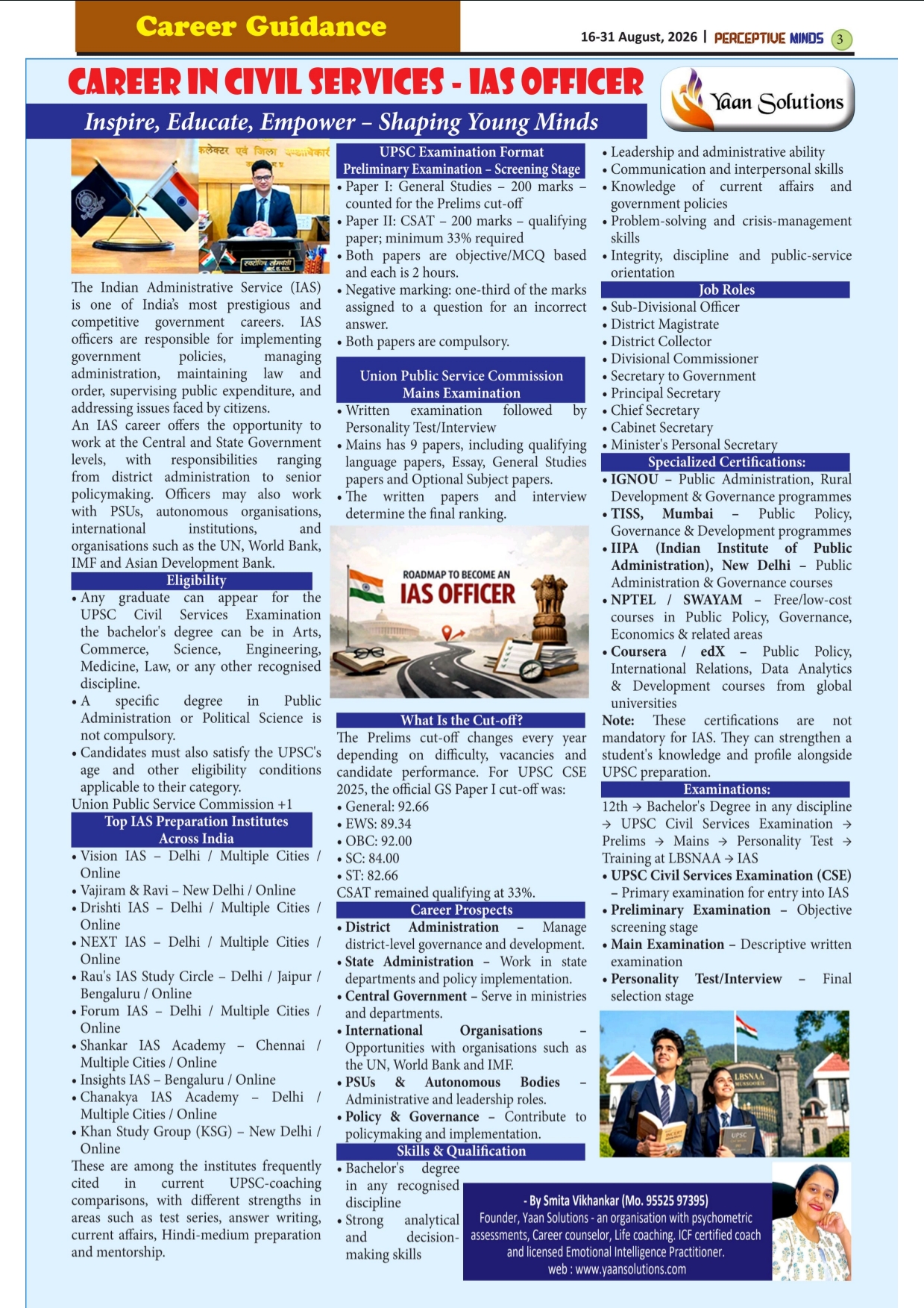
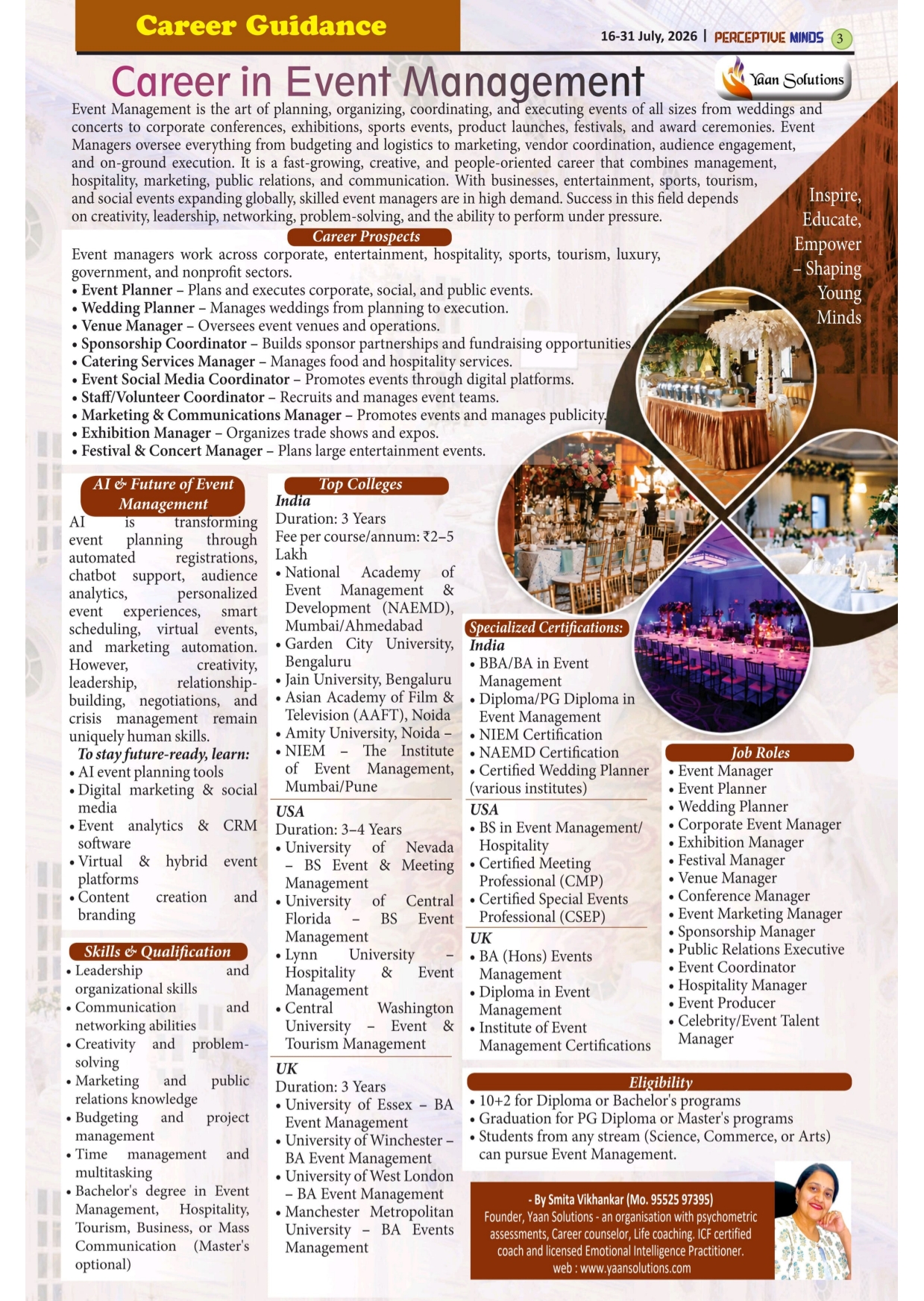
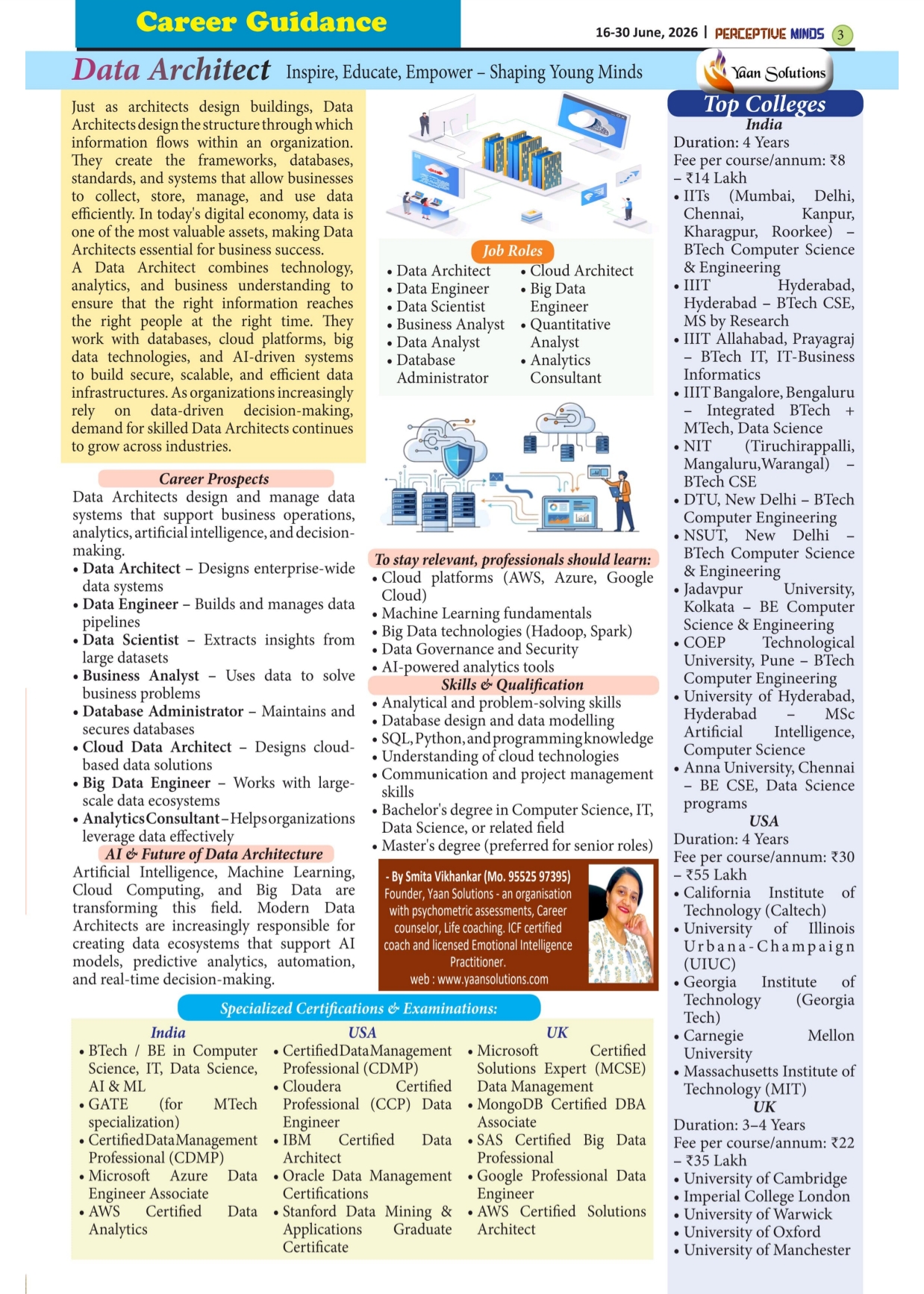
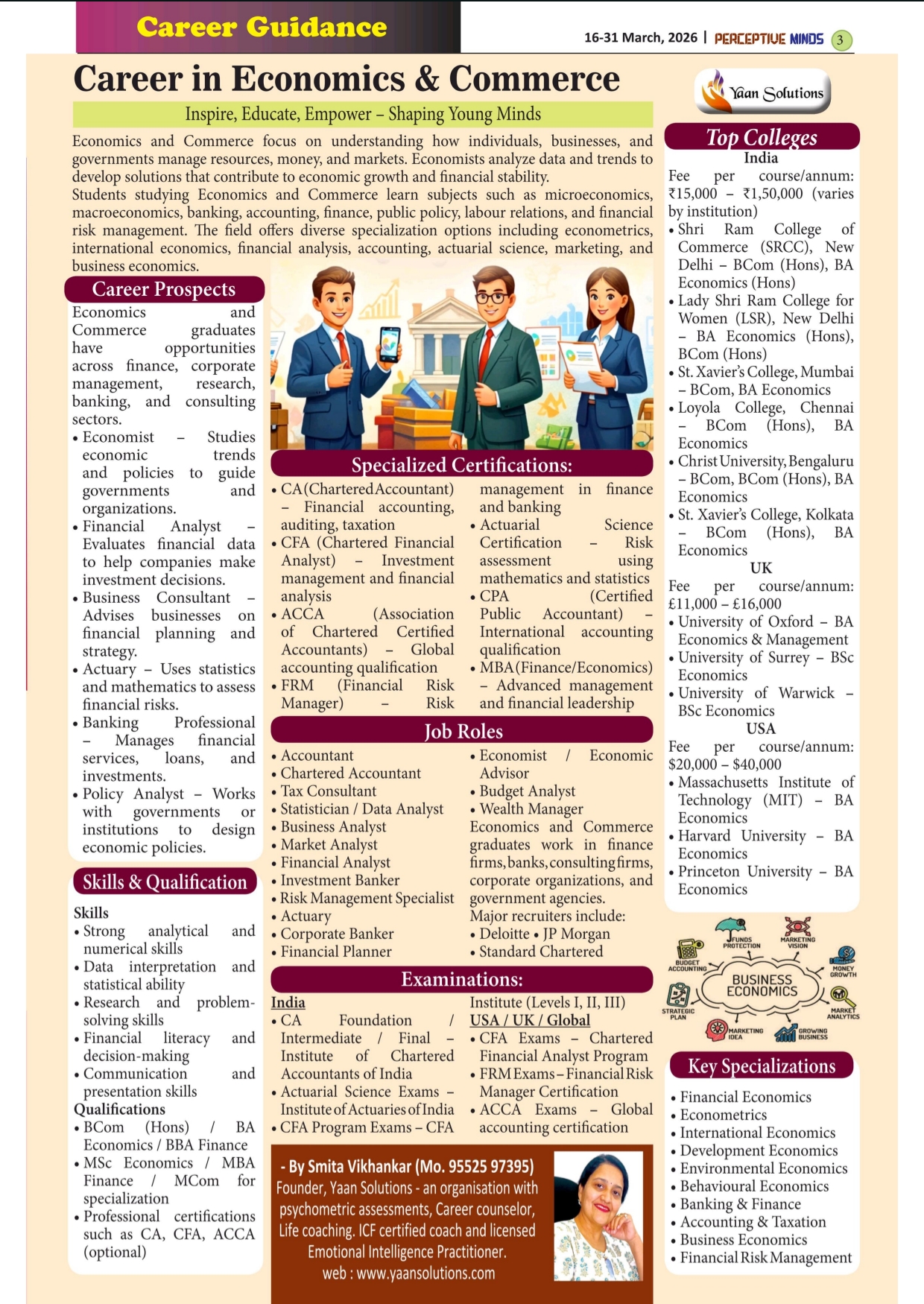
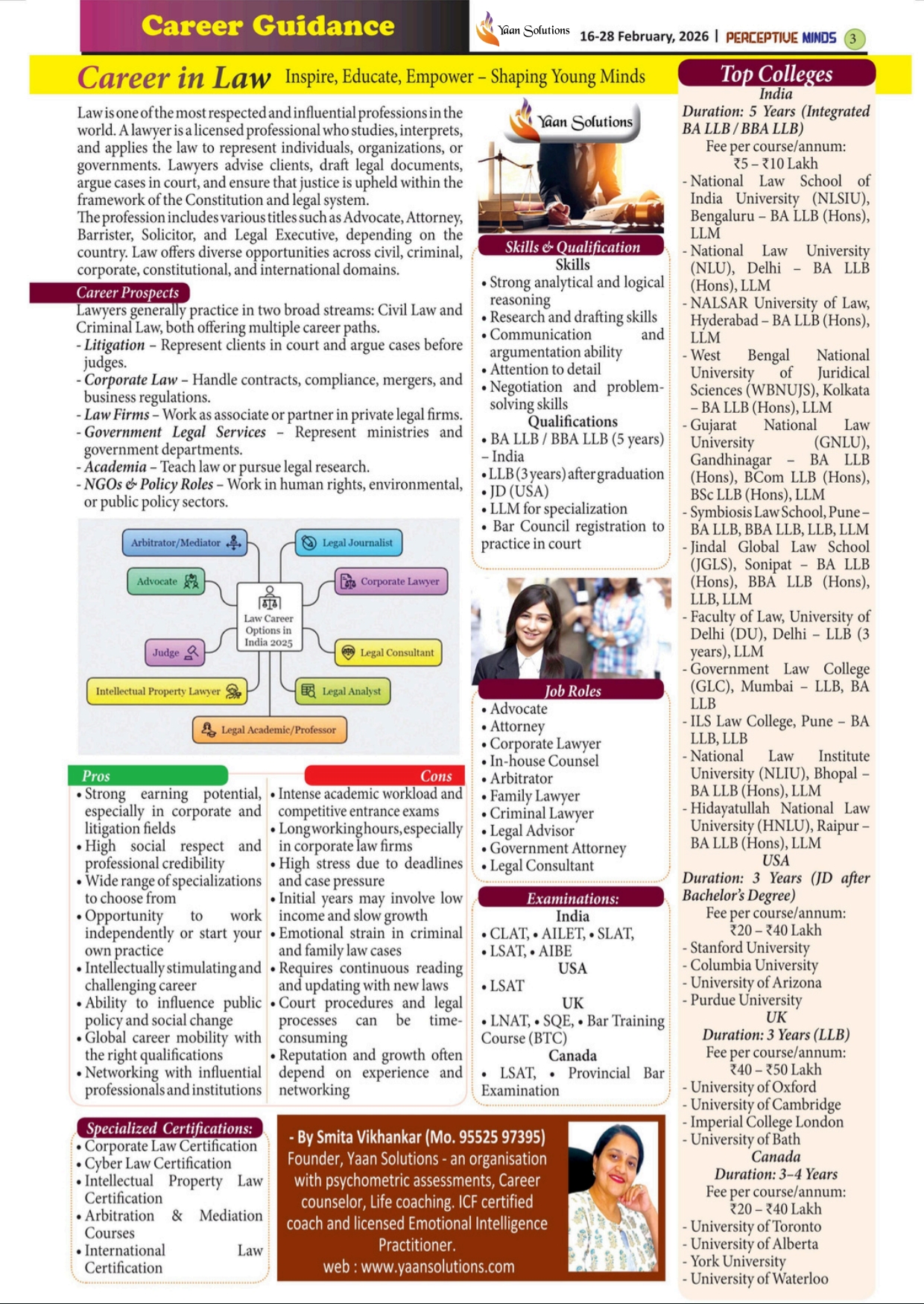
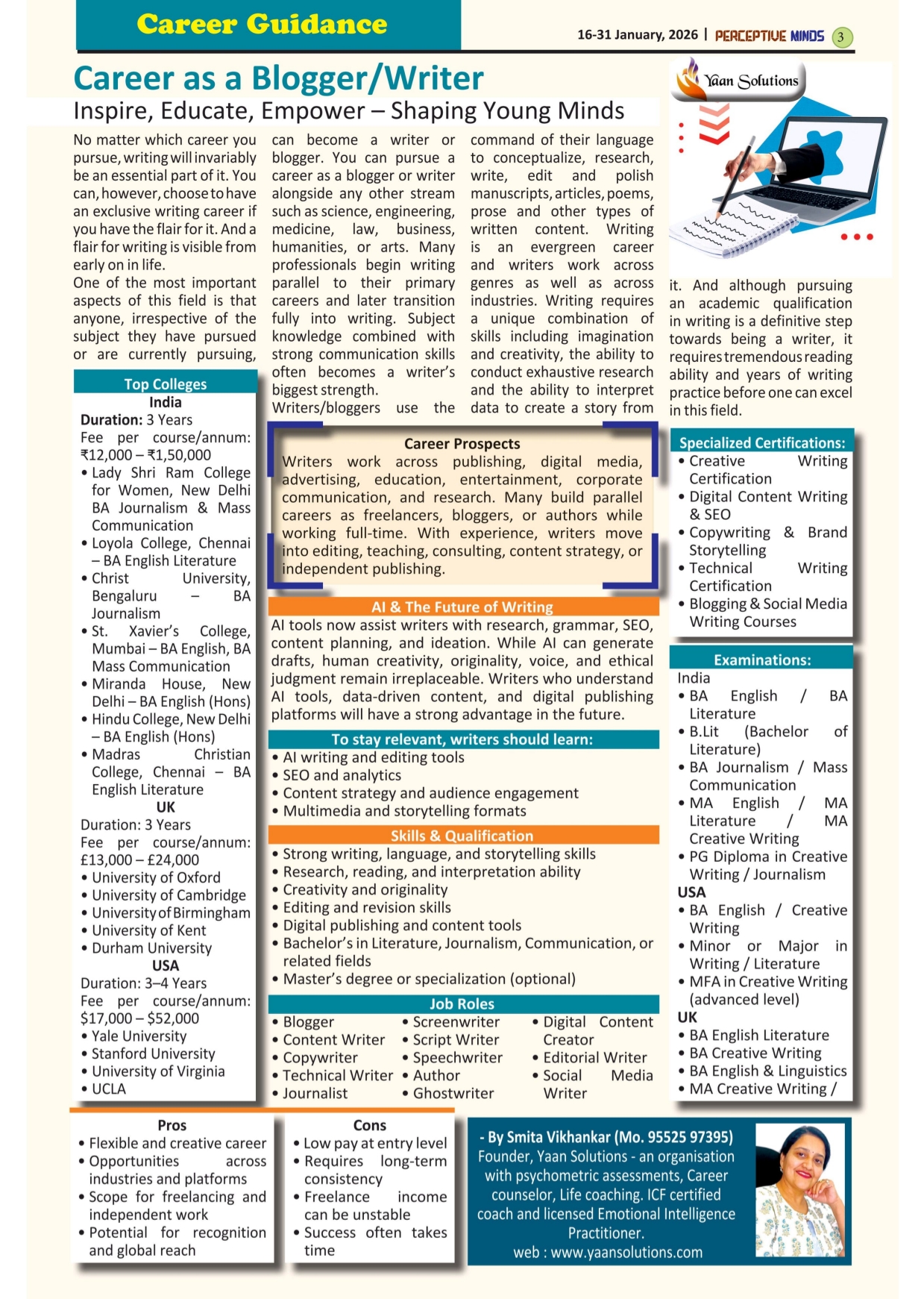
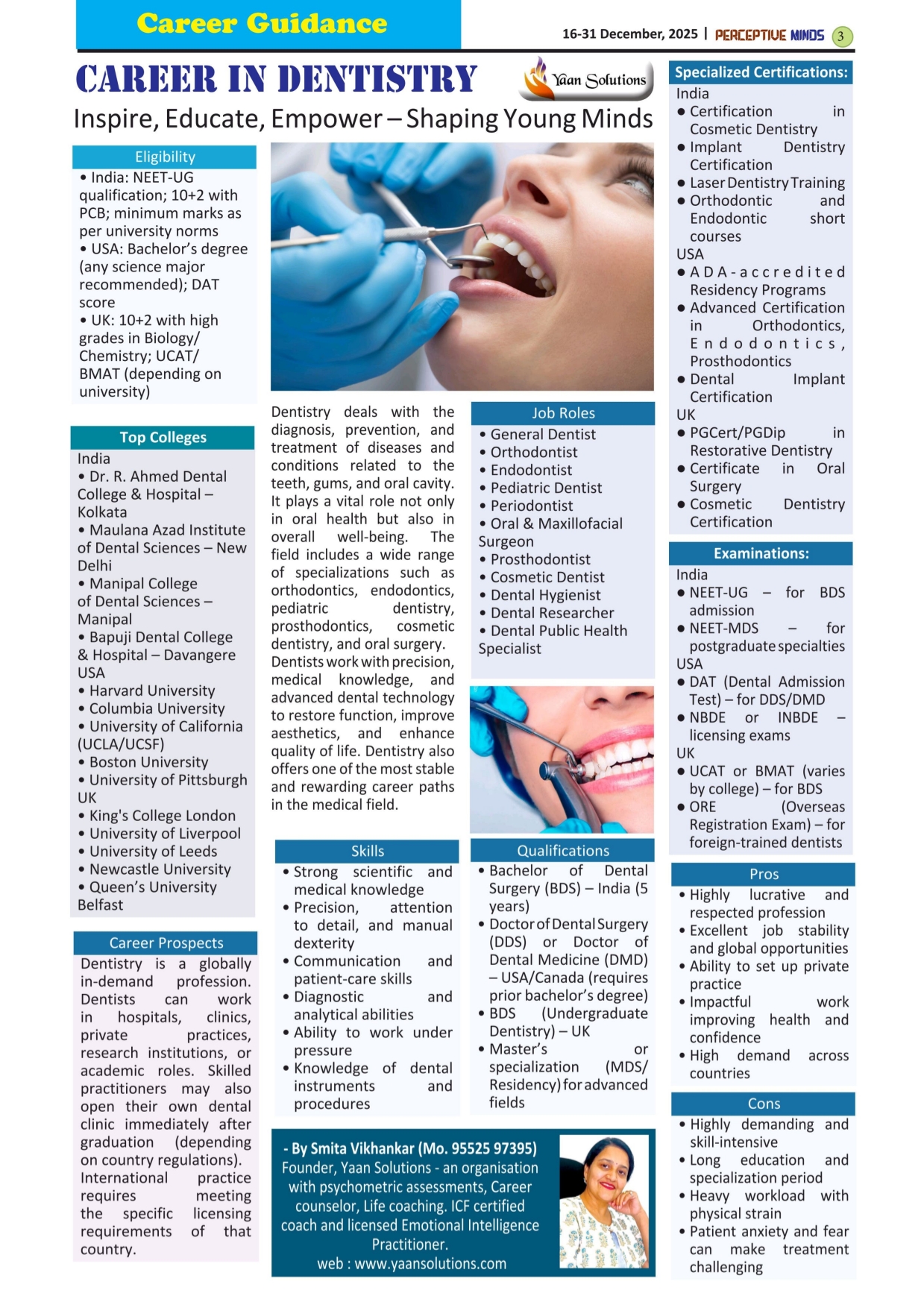
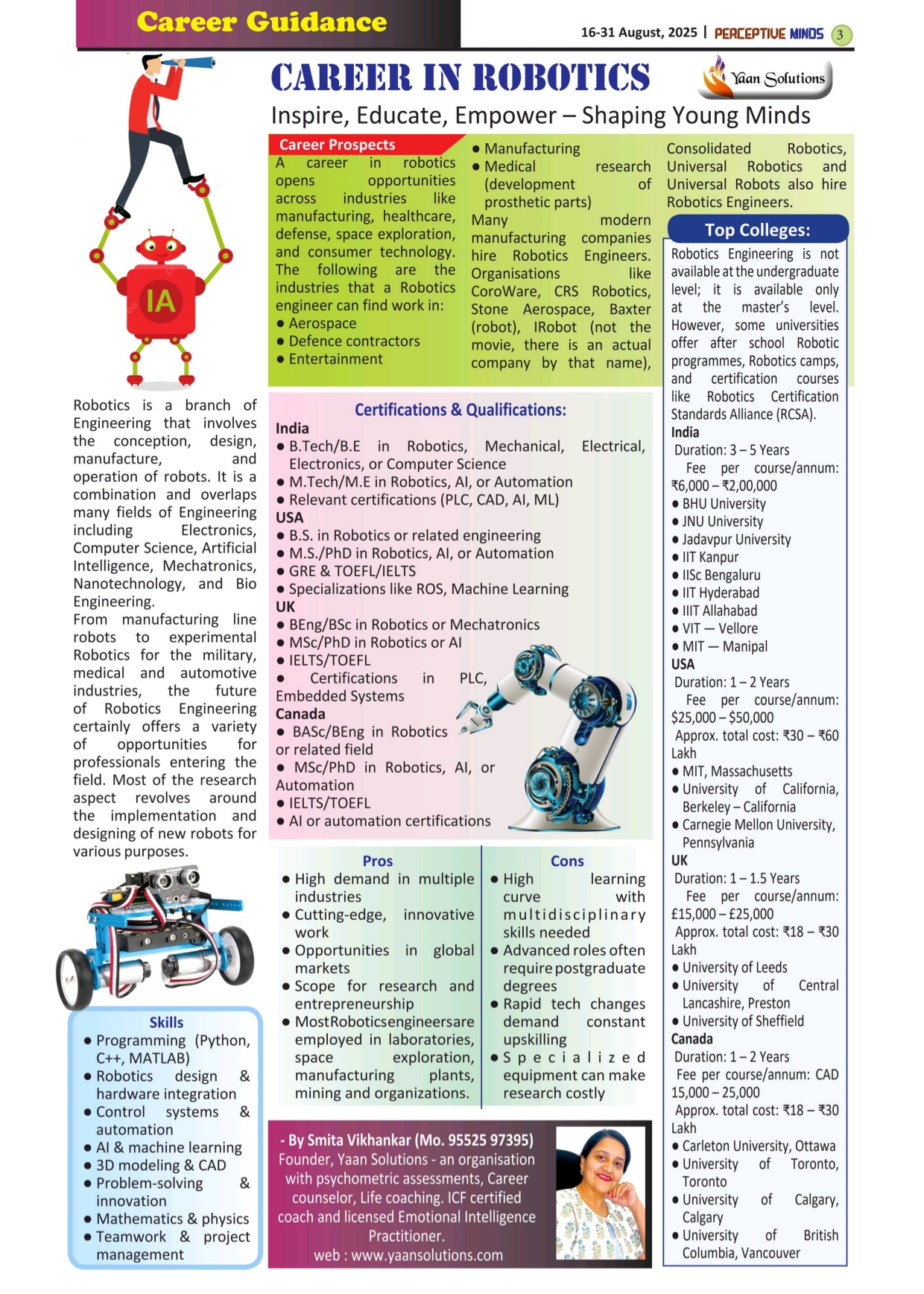
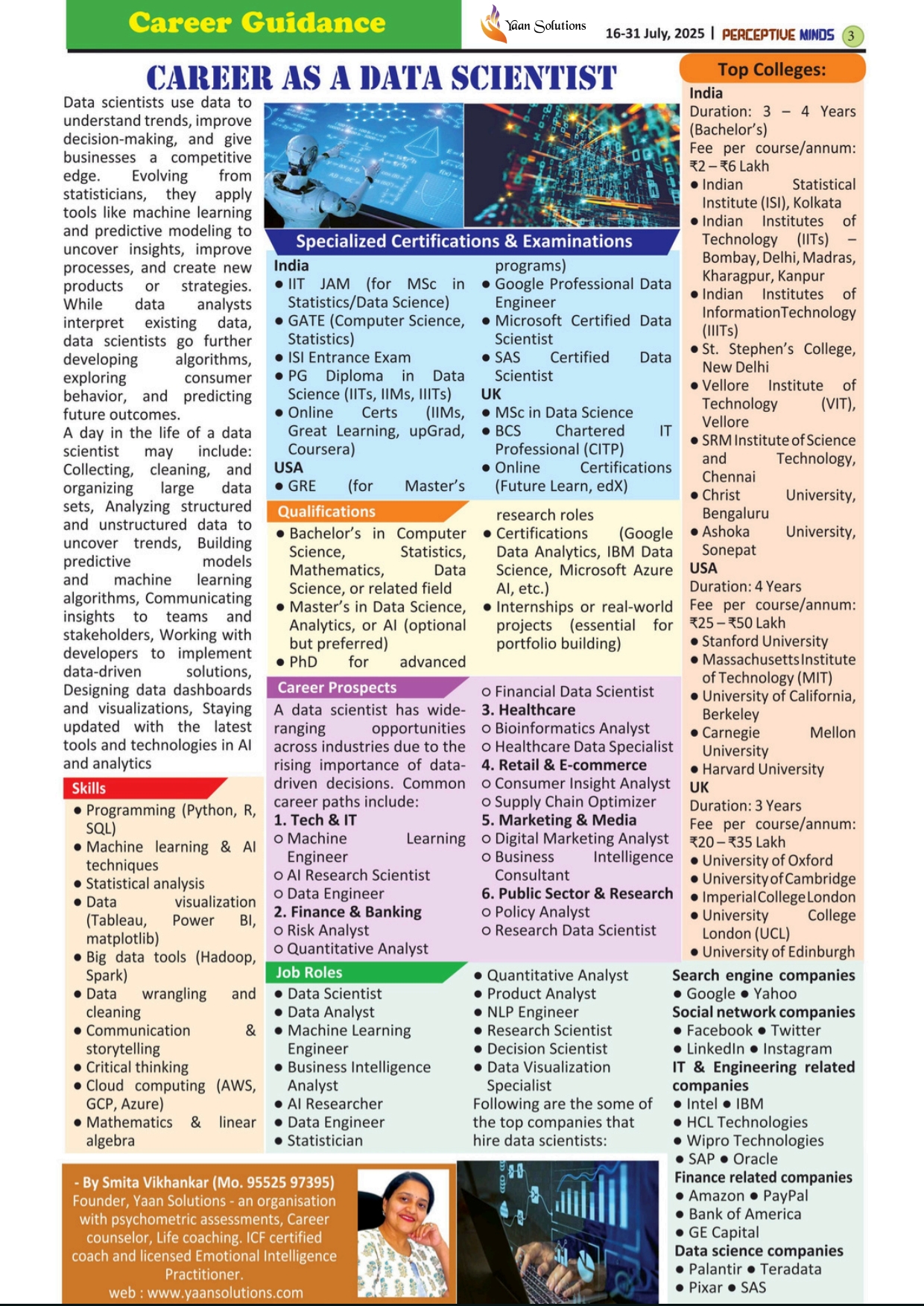
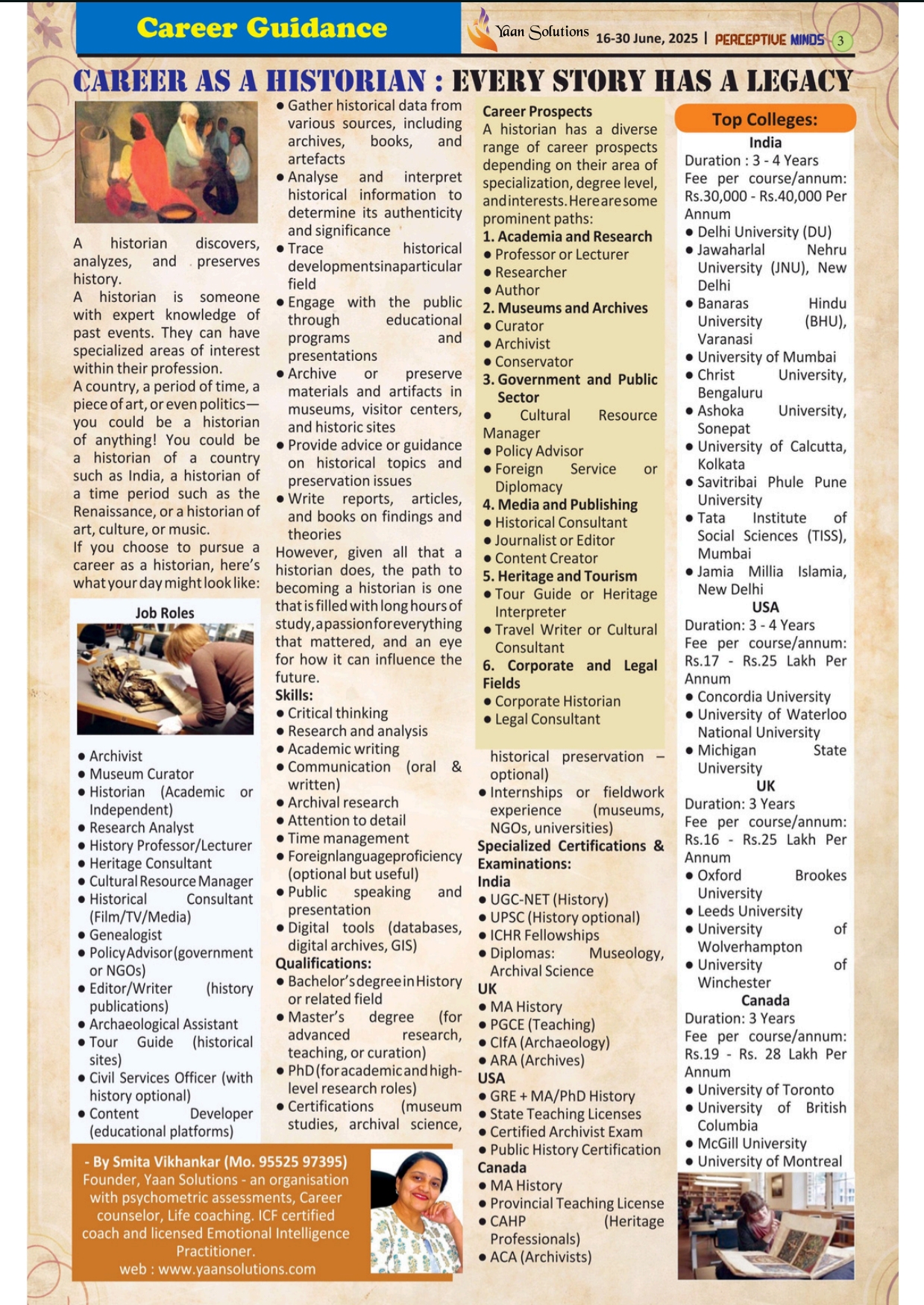
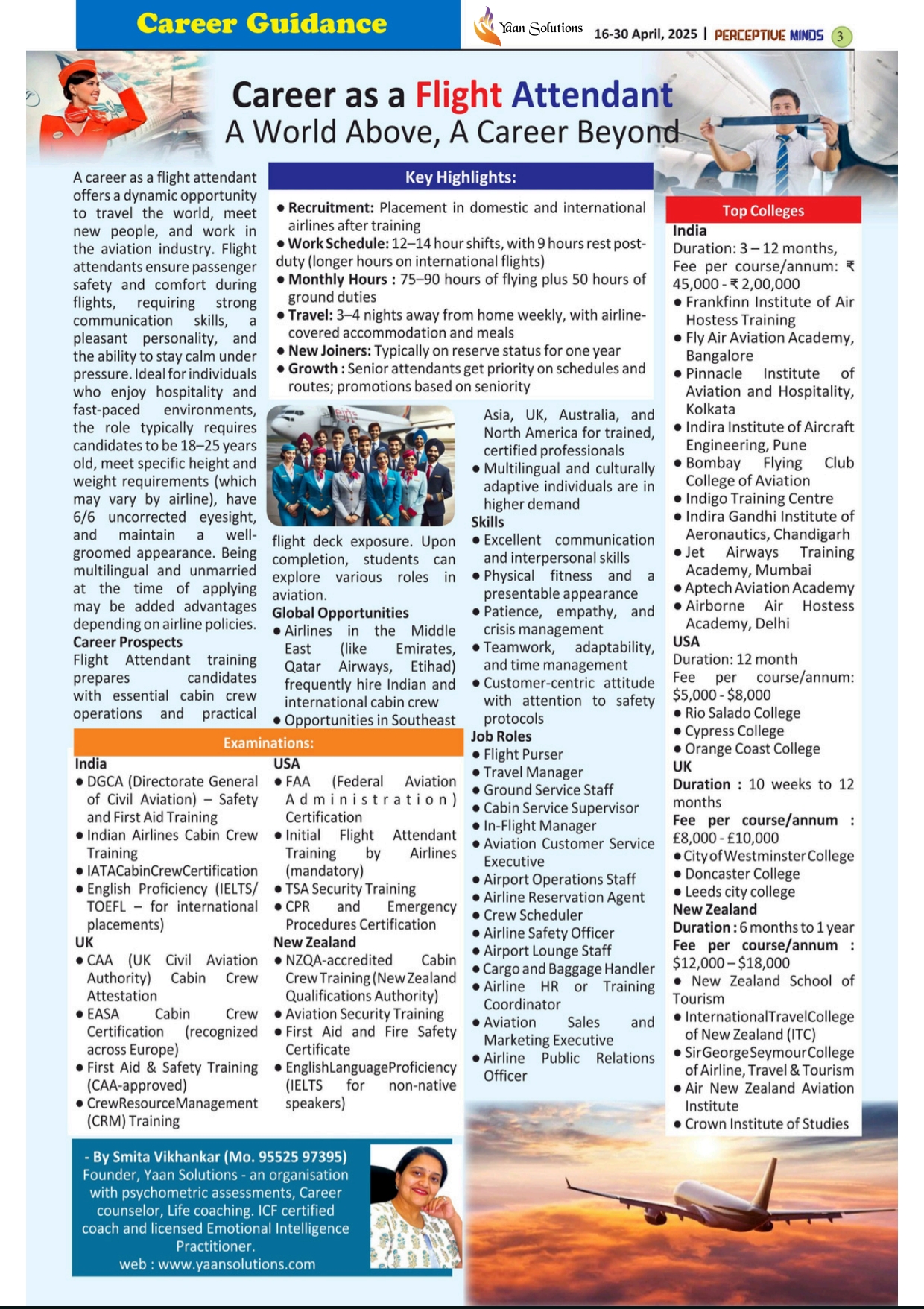
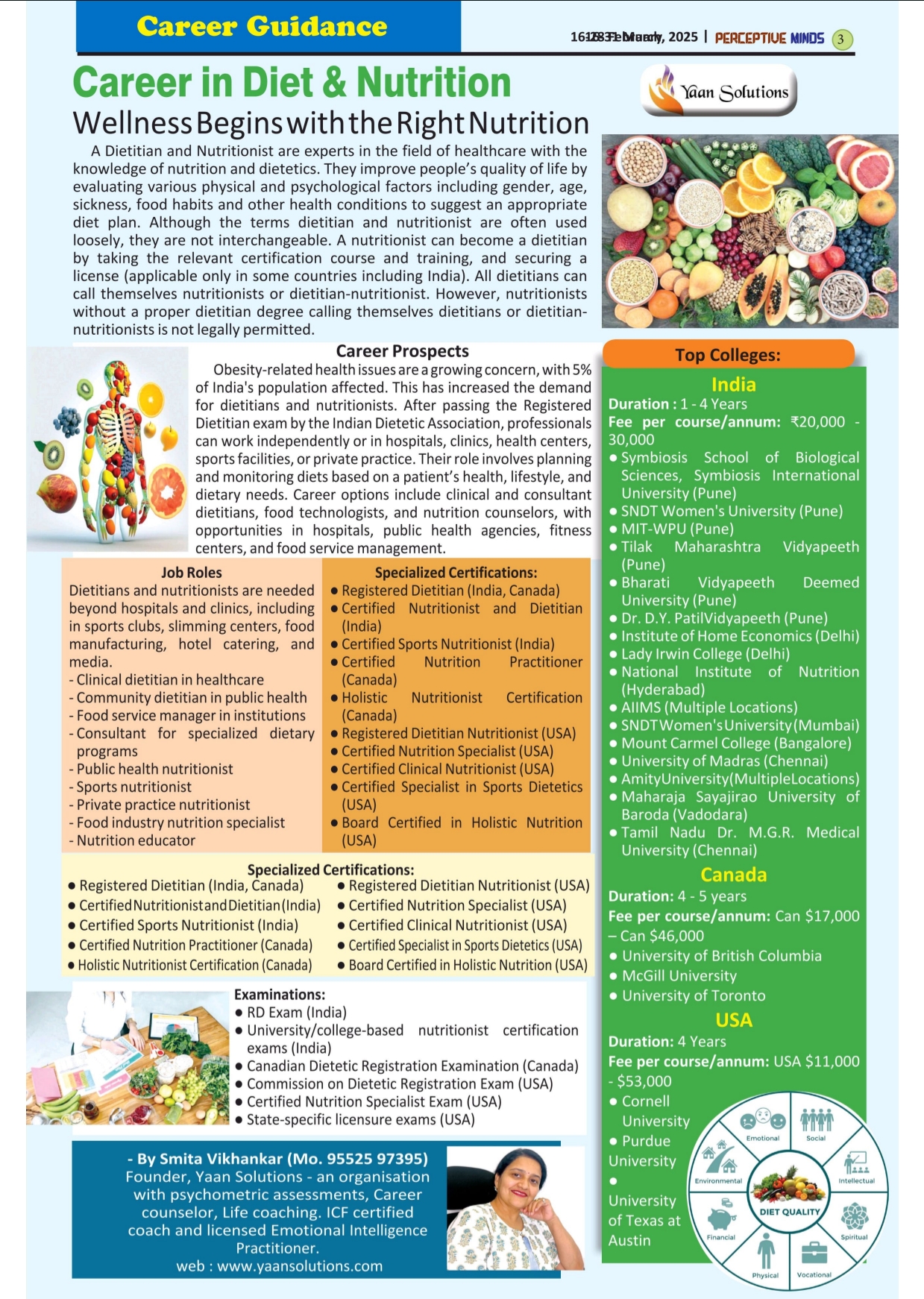
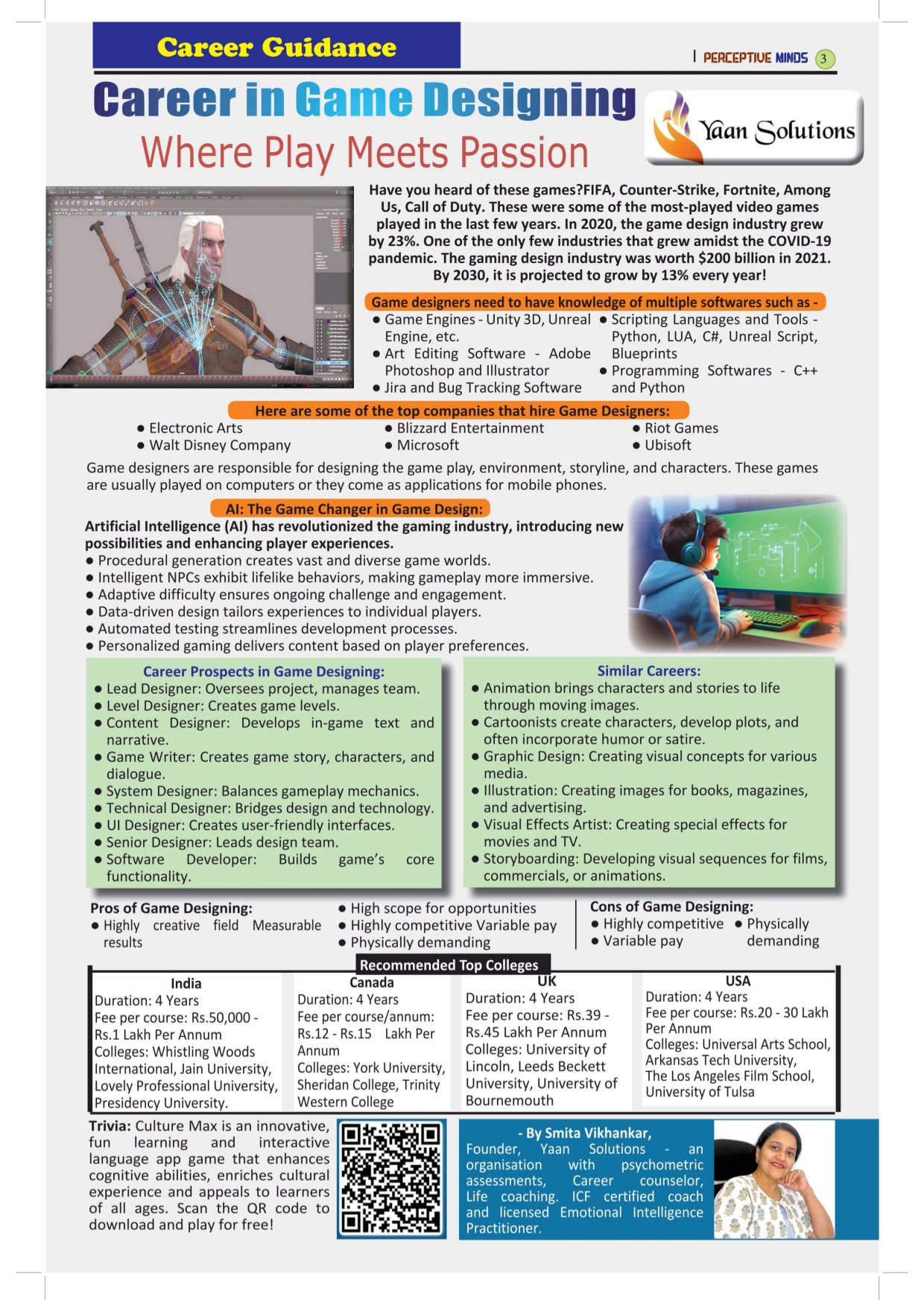
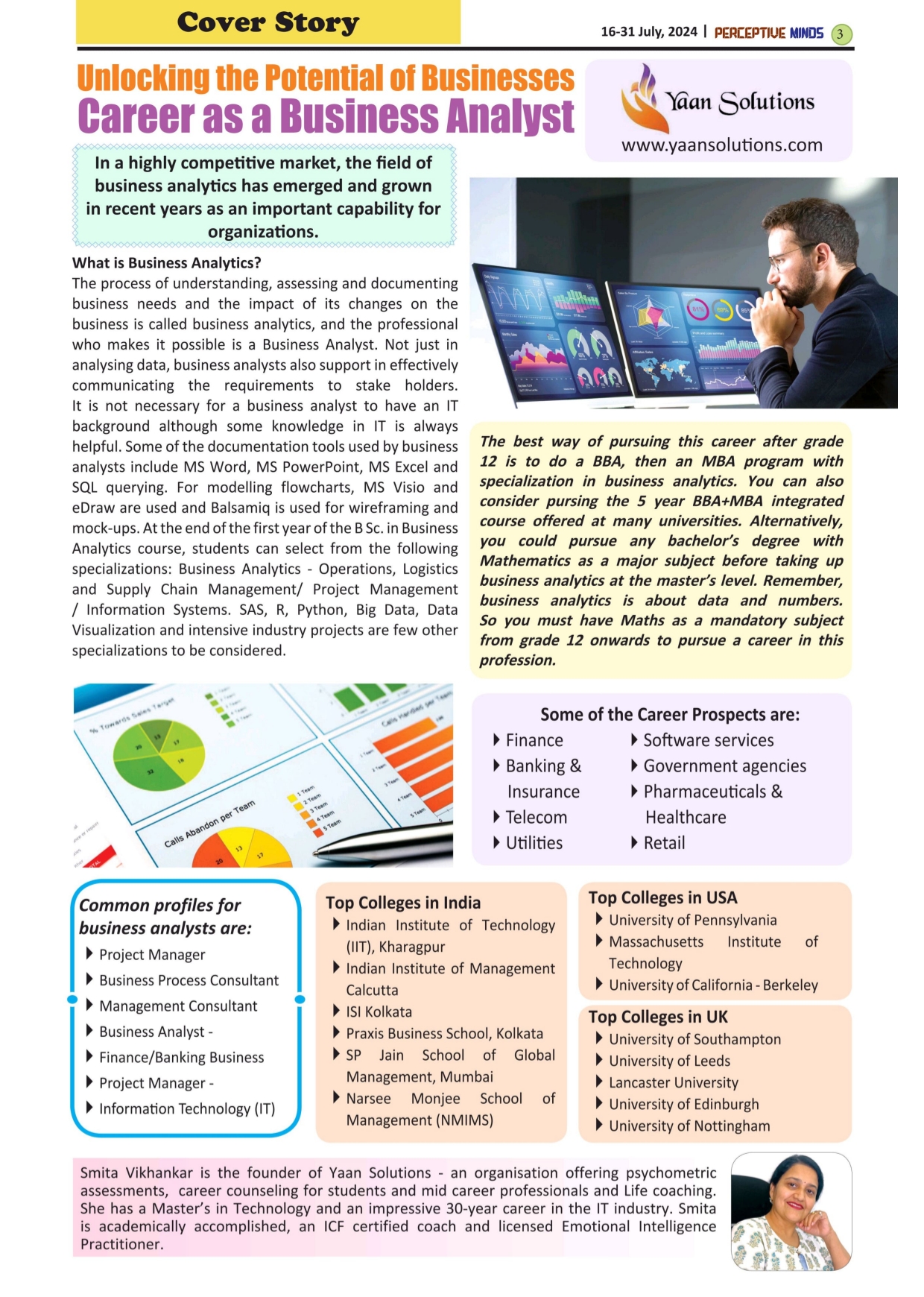
Yaan Solutions Articles on Careers
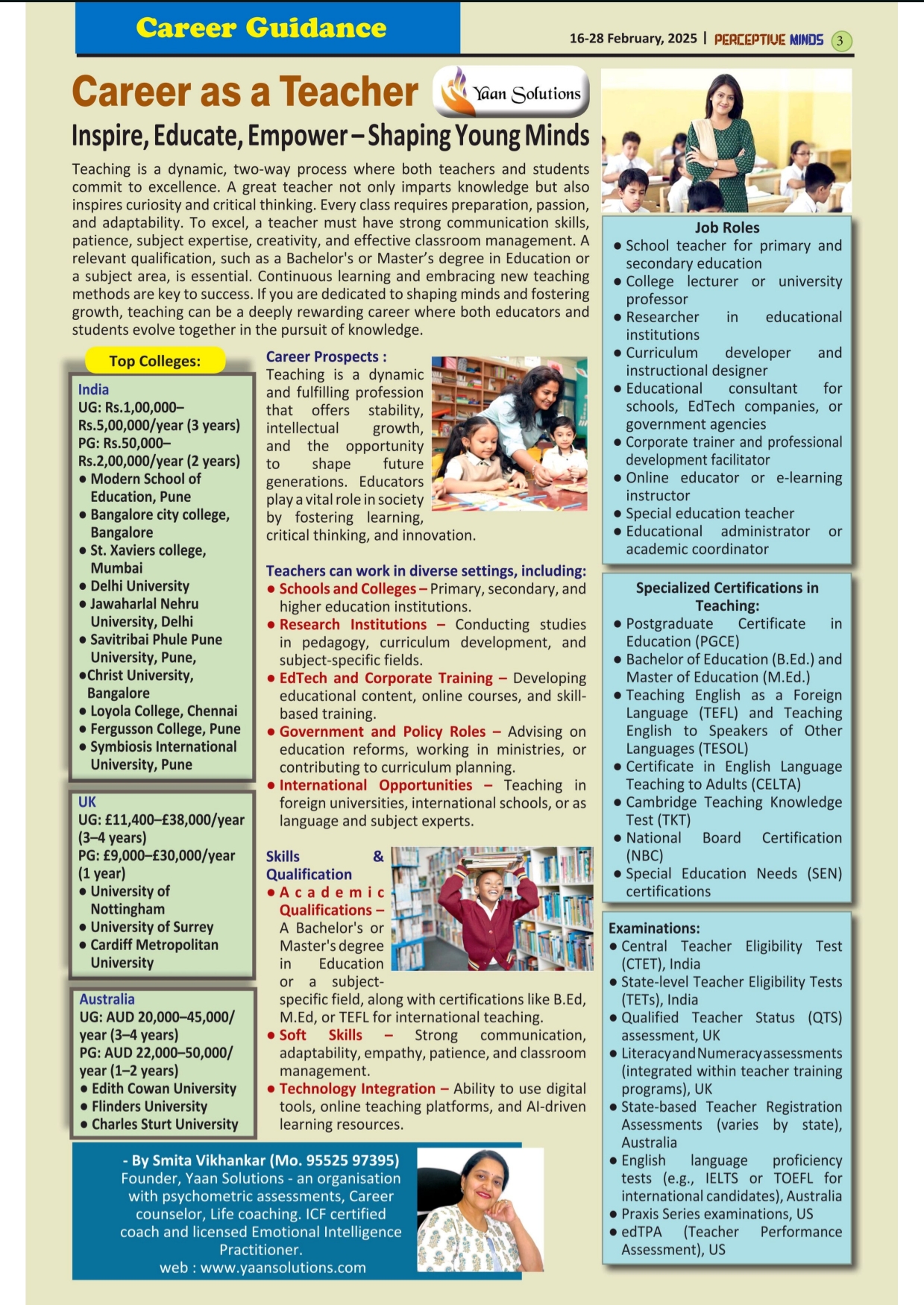
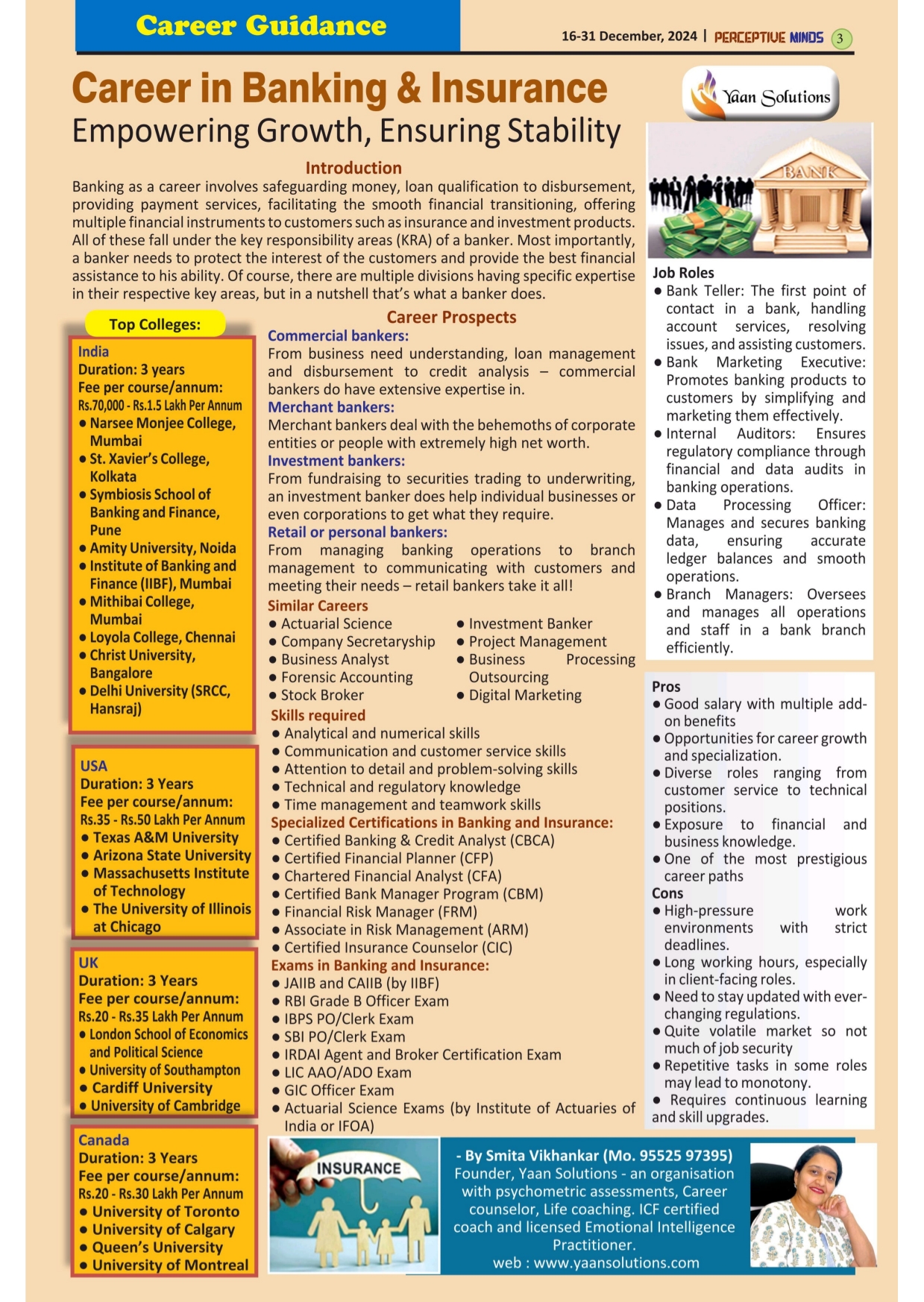
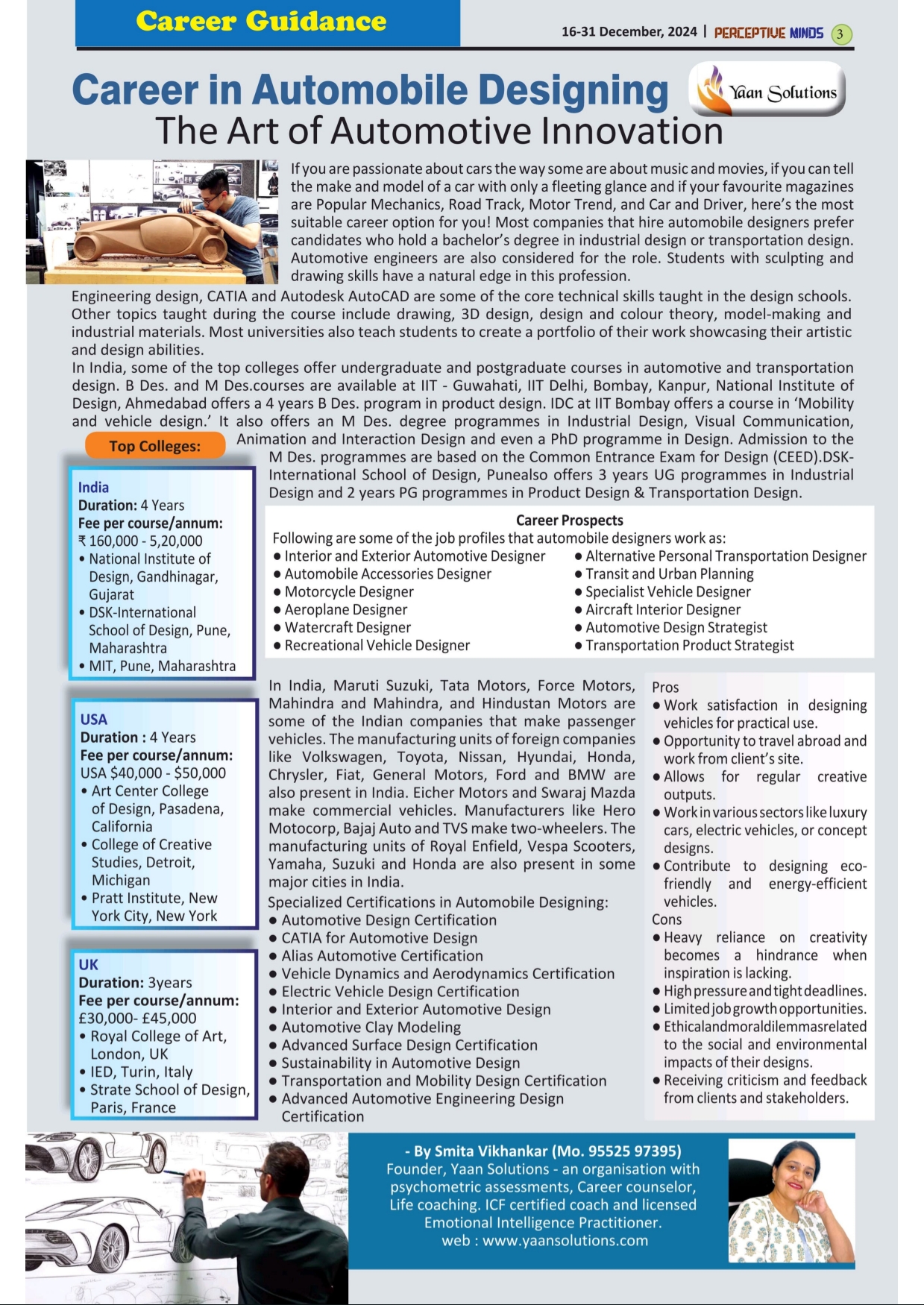
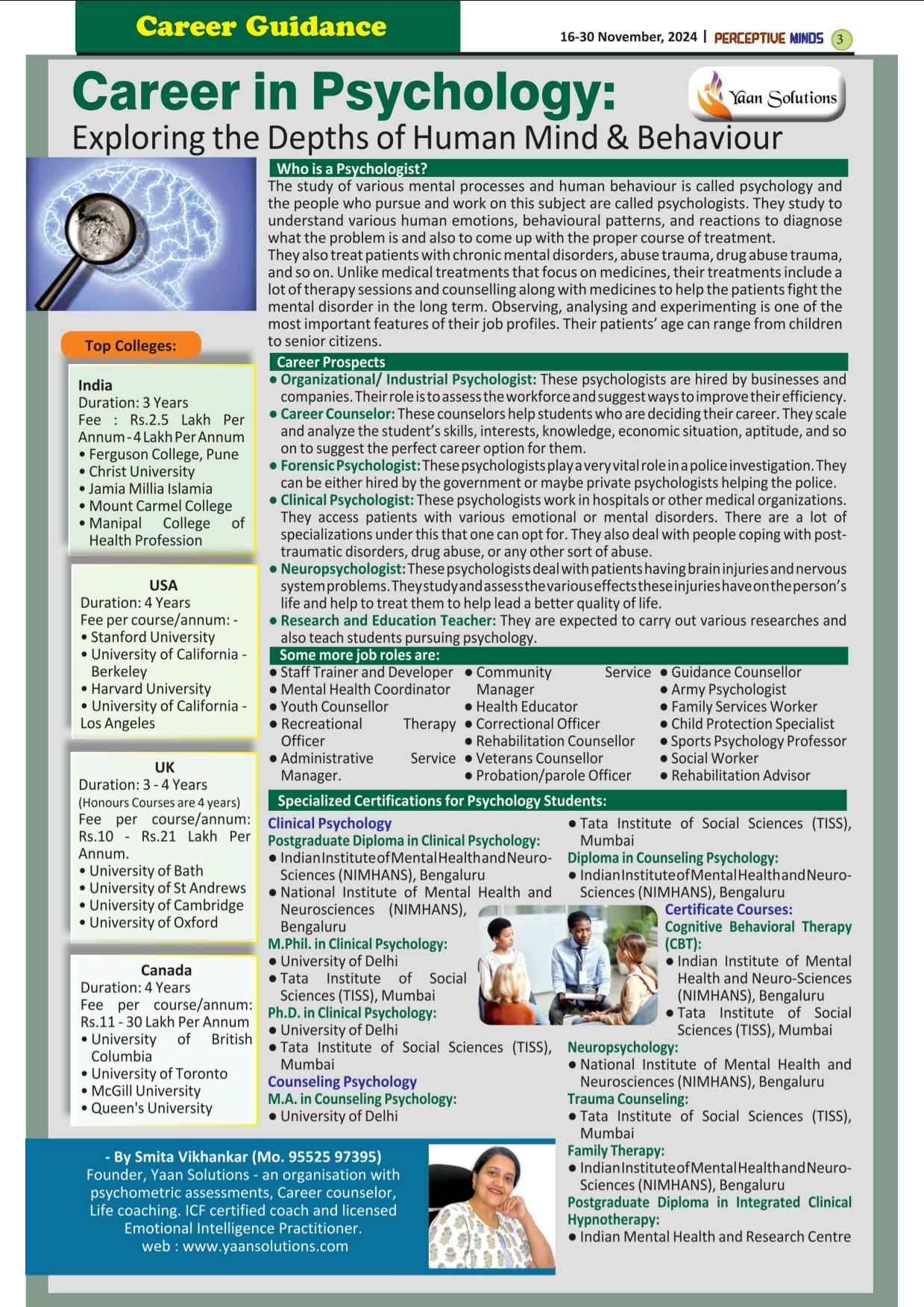
Explore our expert career insights and guidance, published every month in Perceptive Minds Magazine.
The Right Time for Structured Guidance Is Before the Pressure Peaks
If your child is approaching stream selection or a post-12th decision, this is the point where structured career guidance makes the greatest difference.